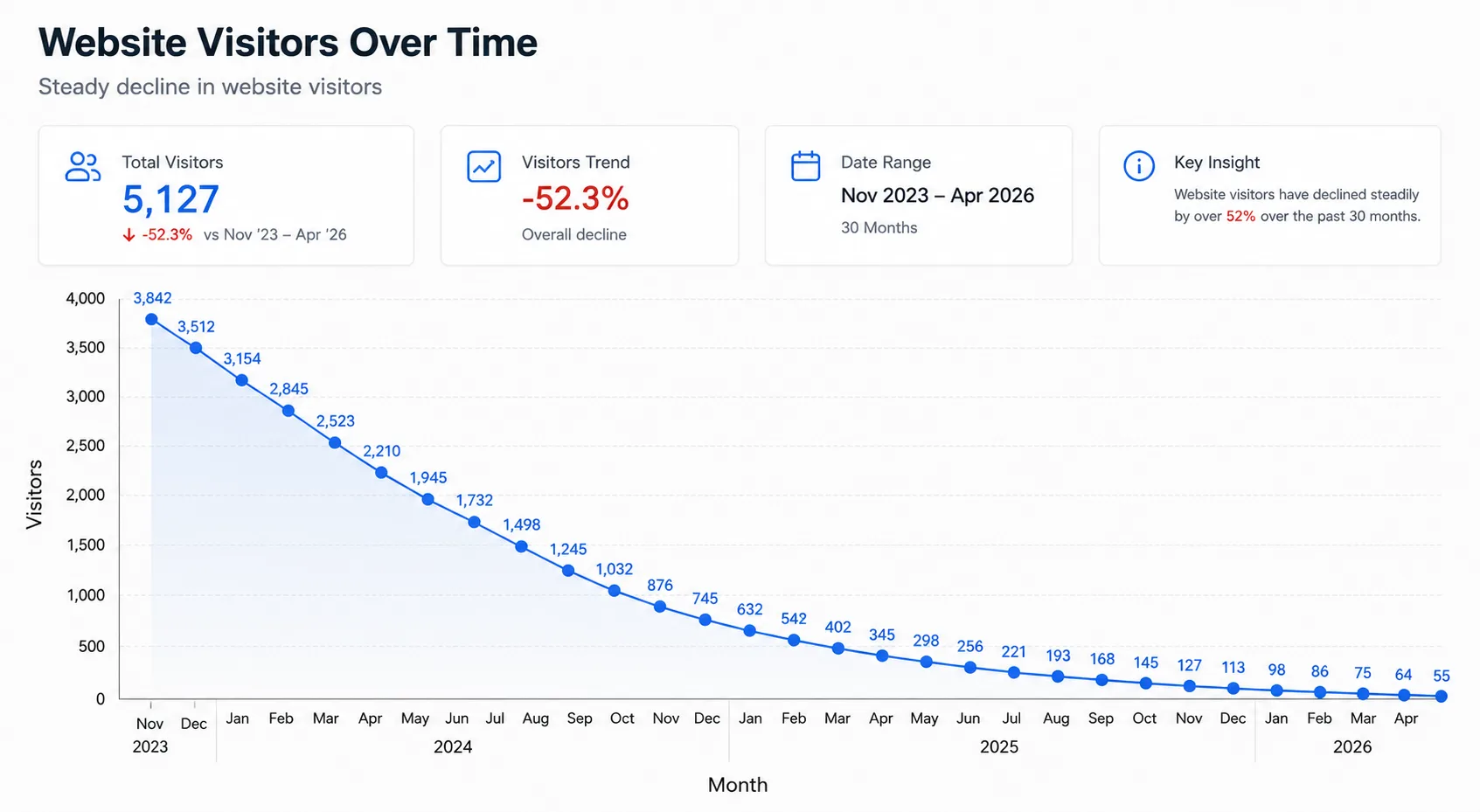
There's a version of your business that's losing customers every single week — and you'll never know it happened. No phone call that was ignored. No message that went unanswered. Just a potential customer who searched for exactly what you offer, found your website, looked around for about 30 seconds, and then called someone else.
No complaint. No feedback. They just left.
This is the most common problem we see with contractors across Gwinnett County — HVAC technicians in Norcross, plumbers in Lawrenceville, roofers in Duluth, and flooring companies throughout Peachtree Corners. The work is good. The prices are fair. But something between "they found you" and "they called you" is getting in the way.
"The lead wasn't lost because of your price or your reputation. It was lost before they ever had a chance to learn either."
The 30-Second Decision
When someone searches for a plumber, an HVAC tech, a roofer, or a flooring contractor, they don't spend a long time evaluating. They glance at two or three results. They click on one or two websites. And within about 30 seconds, they've already formed an opinion about whether they're going to call.
That 30-second window is everything. And most service business websites don't pass it.
Here's what's happening in those 30 seconds: the visitor is asking themselves three questions, whether they realize it or not:
- Do I understand what this business does?
- Do they seem like someone I can trust?
- Is it easy to reach them?
If the answer to any of those is "not really," they're gone.
What's Actually Getting in the Way
After looking at dozens of service business websites, the same issues come up again and again. None of them are catastrophic on their own. But together, they create a pattern of friction that pushes potential customers away before you ever know they were there.
Unclear messaging. The homepage says something like "Quality Service You Can Trust" or "Your Local Experts Since 1998." That sounds fine, but it doesn't actually tell the visitor what you do. They have to dig. And most people won't.
A phone number that's hard to find. This one surprises people, but it's extremely common. The phone number is in the footer, or it's only on the contact page, or it's just not prominent. On mobile — where most of your visitors are coming from — a buried phone number is almost as bad as no phone number at all.
No trust signals. Reviews, licenses, before-and-after photos, real testimonials from real people. These are what make a stranger feel safe enough to pick up the phone. When they're missing, the site feels anonymous and unverifiable, and people move on.
A site that looks outdated. People make snap judgments about quality based on appearance. A website that looks like it was built ten years ago — even if the actual work is excellent — signals "this business may not still be operating" or "I'm not sure I can trust this." Unfair, but true.
A note on mobile: Over 70% of local service searches happen on a phone. If your website is hard to navigate on a small screen, your phone number requires zooming in, or buttons are too small to tap — you're losing the majority of your potential calls before they start.
The Problem Nobody Talks About: The Follow-Up Gap
Even when someone does reach out — fills out a form, sends an email, leaves a voicemail — there's often a second place leads get lost: the response.
Slow response times kill conversions. Studies consistently show that responding to a lead within the first hour makes you many times more likely to close the job than responding the next day. People have options. They're contacting more than one company. If you're third to respond, you're usually not getting the work.
This isn't about being available 24/7. It's about having a system — even something simple — that acknowledges the inquiry quickly and sets expectations. A text confirmation, an auto-reply with a callback time, something that tells the customer "we got your message and we'll be in touch." That alone closes more jobs than most business owners realize.
The Fix Isn't Always Complicated
This is something we say often because it's true: most of the time, fixing what's costing you leads doesn't mean rebuilding your entire website or investing in a major overhaul. It usually means fixing a handful of specific things.
Making the phone number bigger and more visible. Rewriting the headline so it actually says what you do. Adding a few real reviews in a prominent place. Making sure the site loads quickly on mobile. Setting up a basic auto-response so inquiries don't feel like they've gone into a void.
These are not glamorous changes. But they're the ones that turn visitors into callers.
"Most businesses don't need more traffic. They need more of their existing traffic to actually pick up the phone."
What to Do Right Now
If you want to start somewhere, try this: pull up your own website on your phone — not your computer — as if you'd never seen it before. Ask yourself:
- Can I tell in five seconds what this business does and who it's for?
- Is there a phone number I can tap immediately?
- Is there anything on this page that makes me feel like I can trust this business?
- If I fill out a form right now, would I expect to hear back today?
If any of those answers make you hesitate, that's where you're losing people.
The good news is that these are fixable problems. They're not about competing with bigger companies or outspending anyone on ads. They're about making sure that the customers who are already looking for you — right now, today — can find a reason to call.
